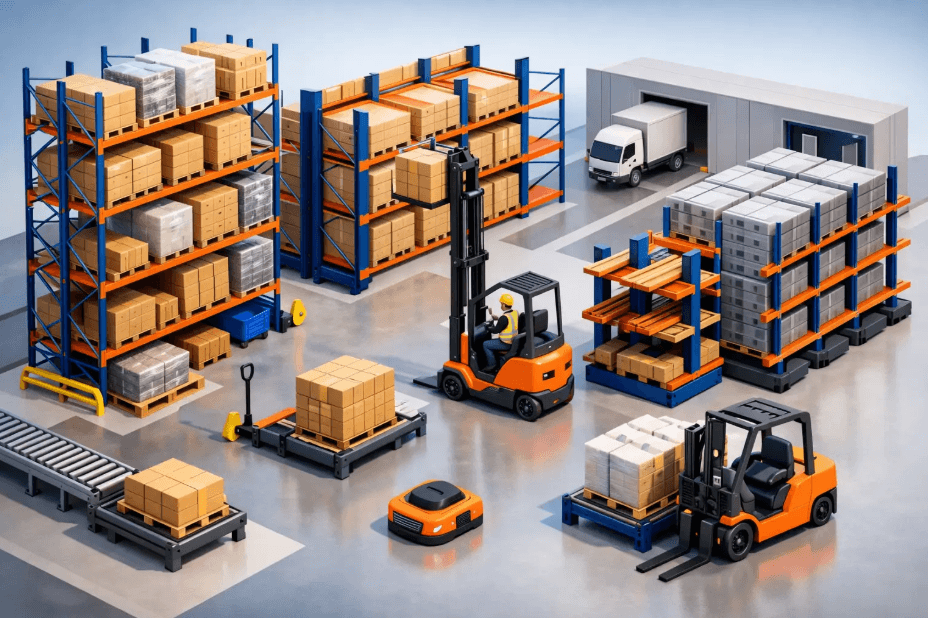
Modern businesses are under constant pressure to fulfil orders faster, improve inventory accuracy, and optimise warehouse operations while keeping costs under control. As customer expectations continue to rise, relying solely on manual processes can limit productivity and restrict future growth. This is why warehouse Robotics Solutions have become an increasingly important investment for organisations looking to build efficient, scalable, and resilient supply chains.
From autonomous mobile robots to automated picking systems, robotics can transform the way warehouses operate. When combined with strategic facility planning from a trusted commercial construction company, businesses can create environments that support both today’s operational needs and tomorrow’s technological advancements. Investing in scalable robotics is no longer just about automation, it is about preparing for sustainable business success.
How Warehouse Robotics Solutions Improve Warehouse Performance
Every warehouse experiences operational challenges as business expands. More inventory, increased order volumes, and tighter delivery schedules require systems that can maintain efficiency under growing demand. Warehouse Robotics Solutions help streamline warehouse activities while providing the flexibility needed for continuous improvement.
Rather than replacing existing operations entirely, robotics can be introduced gradually to complement current workflows and maximise operational performance.
Accelerating Material Movement
Efficient movement of products is critical to warehouse productivity. Robotic systems automate transportation between storage, picking, packing, and shipping areas, significantly reducing unnecessary travel time and manual handling.
Advantages include:
- Faster product transfers
- Reduced warehouse congestion
- Consistent operational flow
- Lower handling delays
- Improved order turnaround times
By automating repetitive transportation tasks, businesses can increase throughput while maintaining reliable daily operations.
Supporting Consistent Workflow
Unlike manual operations that can fluctuate throughout the day, robotic systems maintain consistent performance regardless of workload. This consistency allows warehouse managers to better predict processing times and allocate resources more effectively.
As order volumes increase during busy periods, warehouse Robotics Solutions help businesses maintain service quality without compromising operational efficiency.
Increasing Inventory Accuracy and Visibility
Maintaining accurate inventory becomes increasingly difficult as warehouses expand. Even small inventory discrepancies can affect customer satisfaction, purchasing decisions, and overall operational efficiency. Robotics help improve inventory management by reducing manual errors and providing reliable product tracking throughout warehouse operations.
Greater visibility also enables businesses to make informed decisions based on accurate operational data.
Enhancing Inventory Control
Warehouse Robotics Solutions continuously support inventory movement while integrating with warehouse management systems. Every product movement is tracked, providing real-time updates that improve stock visibility and inventory accuracy.
Key benefits include:
- Accurate inventory records
- Improved stock location tracking
- Faster cycle counting
- Better replenishment planning
- Reduced inventory discrepancies
Accurate inventory information allows businesses to respond more quickly to changing customer demand and minimise unnecessary stock shortages.
Improving Order Fulfilment Quality
Order accuracy directly influences customer satisfaction and business reputation. Robotic technologies help ensure products are correctly selected, transported, and prepared for shipping with minimal human error.
Improved fulfilment processes reduce costly returns, increase customer confidence, and support stronger long-term business relationships while maintaining operational efficiency.
Building Warehouses Ready for Future Expansion
Warehouse automation performs best when supported by facilities designed for flexibility. As businesses introduce new technologies over time, warehouse infrastructure must accommodate additional equipment, electrical requirements, and changing workflows without requiring extensive reconstruction.
Working alongside an experienced commercial construction company helps businesses create facilities capable of supporting long-term automation strategies.
Designing Flexible Warehouse Infrastructure
Warehouse layouts should be planned with future expansion in mind. Flexible infrastructure allows robotic technologies to be integrated efficiently as operational needs evolve.
Important planning considerations include:
- Modular storage layouts
- Expandable automation zones
- Future electrical capacity
- Reliable communication networks
- Clear robotic travel paths
These design features reduce future upgrade costs while allowing businesses to adopt new technologies with minimal operational disruption.
Simplifying Future Automation Projects
Businesses rarely implement every automation solution at once. Instead, successful organisations introduce robotics in stages as operational demands increase.
A commercial construction company experienced in industrial facilities can help create buildings that simplify future installations. MTLI Group supports warehouse development by ensuring facilities remain adaptable for evolving automation technologies and long-term operational growth.
Improving Workforce Productivity
Warehouse Robotics Solutions are designed to enhance workforce performance rather than replace skilled employees. By automating repetitive and physically demanding activities, robotics allow staff to focus on responsibilities that require judgement, problem-solving, and customer support.
This balanced approach improves both operational efficiency and employee satisfaction.
Allowing Employees to Focus on Higher-Value Tasks
Routine activities such as transporting inventory, moving pallets, and repetitive picking consume valuable employee time. Robotic systems complete these tasks efficiently, allowing warehouse teams to contribute in more strategic areas.
Employees can dedicate more attention to:
- Inventory quality control
- Equipment monitoring
- Process optimisation
- Customer service support
- Warehouse supervision
This shift creates greater value across the organisation while supporting continuous operational improvement.
Supporting Safer Daily Operations
Warehouse environments involve frequent equipment movement and material handling. Robotics help reduce physical strain by managing repetitive transportation and lifting tasks while following programmed movement patterns.
When facilities are properly designed, robotic systems improve warehouse organisation, reduce congestion, and contribute to safer working environments for employees and equipment alike.
See also: Smart Importing from Germany for Growing International Businesses
Achieving Better Long-Term Business Value
Successful automation investments should continue delivering benefits for many years. Warehouse Robotics Solutions provide long-term value by improving efficiency, supporting business growth, and reducing operational costs without sacrificing flexibility.
Businesses that carefully plan automation projects often experience stronger returns while remaining better prepared for future market changes.
Making Smarter Investment Decisions
Every warehouse has different operational priorities. Before introducing robotics, businesses should evaluate where automation will generate the greatest impact.
Areas to assess include:
- Warehouse bottlenecks
- Labour-intensive activities
- Storage capacity limitations
- Customer delivery expectations
- Future expansion plans
A structured implementation strategy helps ensure every automation investment delivers measurable operational improvements.
Working with Experienced Industry Partners
Successful robotics projects involve careful coordination between warehouse planning, infrastructure development, and automation integration. Choosing an experienced commercial construction company helps ensure every aspect of the facility supports future operational goals.
MTLI Group assists businesses in developing warehouses that are prepared for evolving automation technologies while maintaining flexibility for future growth. This integrated approach allows organisations to maximise the long-term value of warehouse Robotics Solutions.
Conclusion
Warehouse Robotics Solutions offer growing businesses a practical way to improve operational efficiency, increase inventory accuracy, enhance workplace productivity, and prepare for future expansion. By introducing robotics strategically, organisations can respond more effectively to changing customer demands while building resilient warehouse operations that support sustainable growth.
Equally important is ensuring that warehouse facilities are designed to accommodate evolving technologies. Partnering with a knowledgeable commercial construction company provides the infrastructure needed for successful automation today and future upgrades tomorrow. With expertise in industrial facilities and automation-ready environments, MTLI Group helps businesses create warehouses that maximise the benefits of Warehouse Robotics Solutions while supporting long-term operational success.